How to Back Up an RV
Go slow, use a spotter when you can, and know your blind spots before you ever shift into reverse.
Slow down, check your mirrors constantly, and get a spotter whenever possible
Backing up an RV comes down to patience and visibility. Roll down your windows, use your mirrors in short glances rather than one long stare, and move in small increments so you can stop the moment something looks wrong. If you have a passenger, have them stand where you can see them in your mirror and agree on hand signals before you start.
The reason this matters beyond the driveway is that backing collisions are common with RVs because of their length and the blind area directly behind them. How you handle that moment shows up later if you ever file a claim, since an insurer will ask what you could see and what precautions you took.
The size and blind spots of your particular RV
A travel trailer, a fifth wheel, and a motorhome all back up differently, and the answer changes with what you're driving. A trailer follows the opposite direction you turn the wheel, which takes practice to unlearn if you're used to backing a car. A motorhome backs more like a truck, but its length means the rear end can swing wider than you expect.
Know where your blind spots actually are for your specific rig. Walk around it before you back up the first few times and look at what your mirrors do and don't show you. Many RVs have an area directly behind the bumper that no mirror covers, which is where a backup camera earns its keep if you have one installed.
If you're renting or borrowing an RV you haven't backed before, spend a few minutes in an empty lot getting a feel for it before you're in a tight campsite or a crowded lot with other people around.
What a spotter should actually be doing
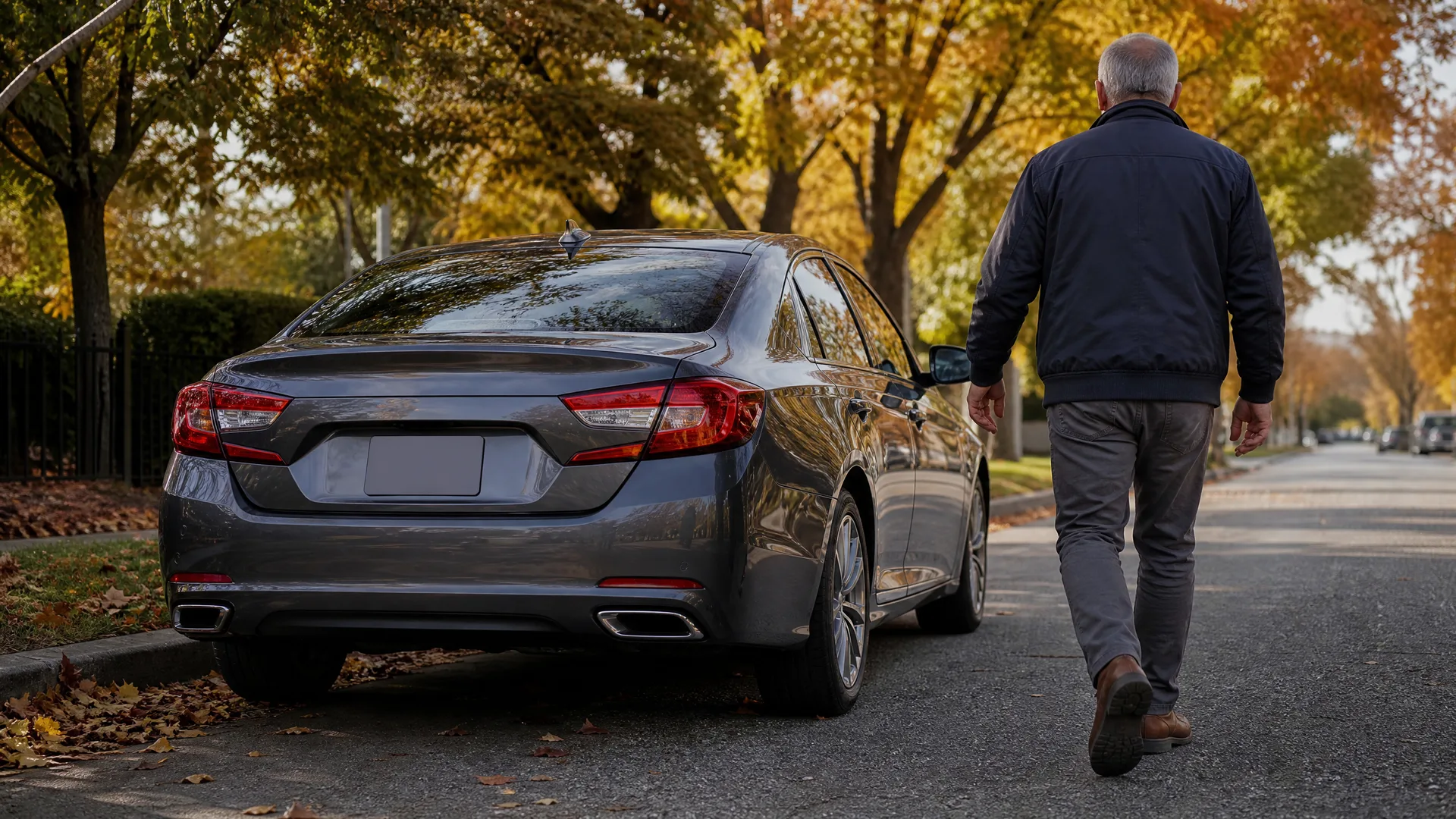
A spotter only helps if they're standing somewhere useful and you've agreed on what their signals mean. Standing behind the vehicle is the wrong spot. They should be off to the side, in view of your mirror, where they can see both your blind spot and where you're headed.
Agree on simple signals before you start moving. A hand up means stop. Pointing left or right means which way to turn the wheel. Shouting through a closed window rarely works, so settle this before you're already in reverse.
If no one is available to spot for you, get out and walk the path yourself first. Look for low obstacles, soft ground, and anything behind you that your mirrors won't catch. Take it slower than you would with a spotter present, since you're relying only on your mirrors and your memory of what you just walked.
Questions people ask about this
What is the hand signal for stop when backing up an RV?
A raised, open palm held steady is the signal most spotters use for stop. Agree on it with your spotter before you start moving, since a signal only works if both people already know what it means. If you lose sight of your spotter in any mirror, stop the vehicle until you can see them again.
Should I use a backup camera or mirrors when backing an RV?
Use both if you have them, since each shows you something the other doesn't. A backup camera covers the blind area directly behind the bumper that no mirror reaches, while your side mirrors show you what's happening along the length of the rig as it turns. Neither replaces a spotter when one is available.
How do I back a travel trailer in a straight line?
Make small steering corrections and look at your trailer's movement in the mirrors rather than the road ahead. A trailer reacts opposite to the direction you turn the wheel, so oversteering is the most common mistake. Practicing in an empty lot before you need to do it in a tight spot makes a real difference.
What should I do if I hit something while backing my RV?
Stop immediately, check for damage to both vehicles or property, and document what happened with photos before you move the RV again. Report it to your insurer even if the damage looks minor, since backing incidents are common claims and your policy will have a process for how to file one. Ask your agent what information they'll need from you.
Does backing into a campsite count as off-road driving for insurance?
No, driving on a campground road or into a designated site is still considered normal use under most RV policies, not off-road driving. What counts as off-road usually refers to driving somewhere not intended for vehicle travel at all. If you're unsure where the line falls under your policy, ask your insurer directly rather than assume.
See what RV insurance looks like if something does go wrong while you're learning.

Before your next trip, find an empty parking lot and practice backing up in both a straight line and a turn, with and without a spotter. Walk around your RV once to see where your mirrors can't reach, and if you can, have someone install or point out a backup camera if your rig has one. Agree on hand signals with whoever usually rides with you, and write them down if you tend to forget. If you've had a backing incident before, pull out your policy or call your agent to understand how that kind of claim was handled and what you could do differently.